How to Remove Limescale from a Kettle: A Practical Cleaning Guide
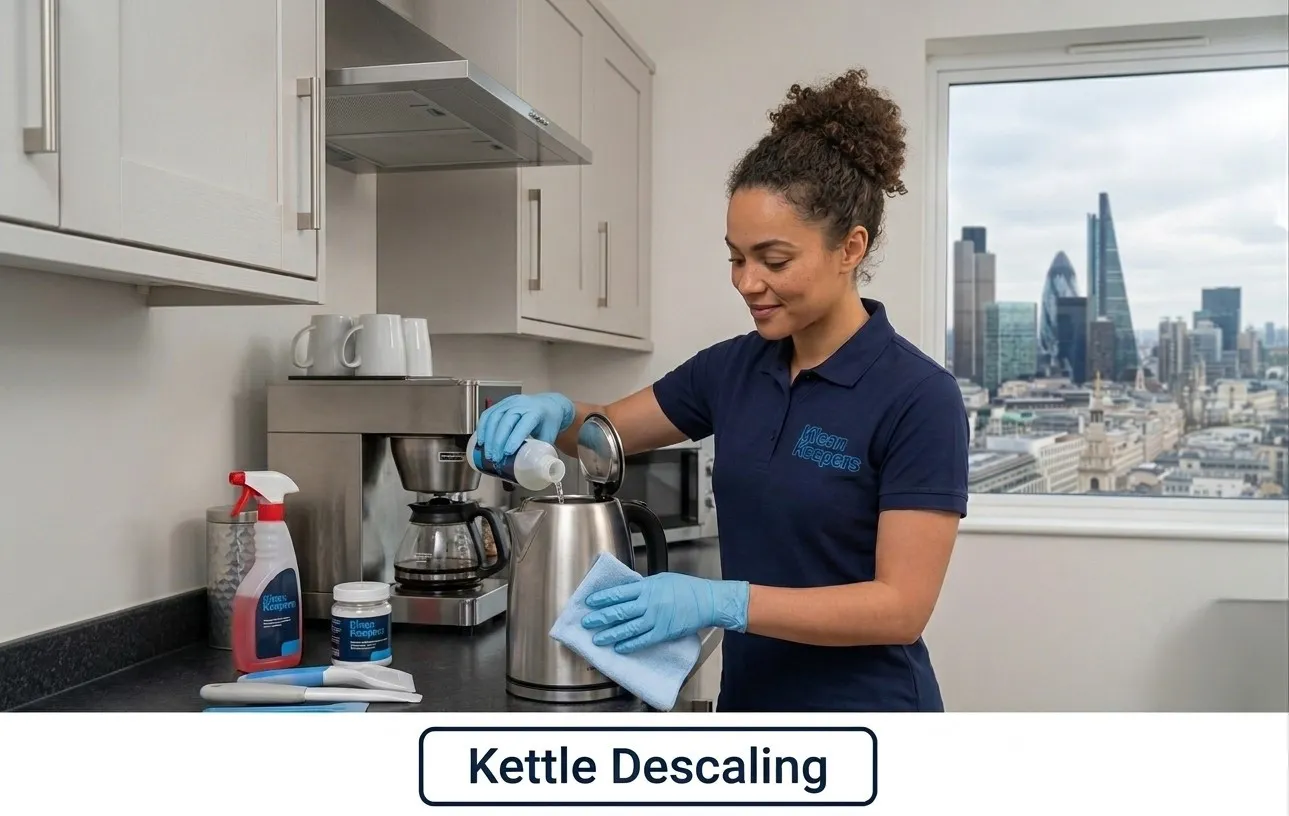
Limescale is a common problem in many homes and workplaces across the UK. If you live or work in London, you will already know that the city has hard water, which means mineral deposits quickly build up inside kettles, coffee machines, taps, and other appliances. Over time, these minerals form a white, chalky residue known as limescale.
For businesses and workplaces, this can be particularly frustrating. A kettle used regularly in an office kitchen can accumulate limescale surprisingly quickly, making it less efficient and sometimes affecting the taste of drinks. At Klean Keepers, we often encounter this issue while providing office cleaning London businesses rely on every day.
In this guide, we will explain what limescale is, why it forms, and the safest ways to remove it from a kettle. We will also share practical tips used by professional cleaners to keep kettles and kitchen appliances in great condition.
What Is Limescale?
Limescale is a mineral deposit made mainly from calcium carbonate. It forms when hard water is heated or evaporates. As the water boils inside a kettle, minerals are left behind and gradually stick to the interior surface.
Over time, this build-up can become quite thick, leading to:
- Reduced heating efficiency
- Increased energy consumption
- White flakes appearing in boiled water
- A chalky taste in tea or coffee
In office environments where kettles are used frequently, limescale can accumulate much faster than in a home kitchen. This is one reason professional commercial office cleaning services often include kitchen maintenance as part of regular cleaning routines.
Why Removing Limescale Matters
Many people ignore limescale until it becomes very noticeable, but regular descaling has several important benefits.
1. Improved Efficiency
Limescale acts as insulation inside the kettle, making it harder for the heating element to warm the water. This means the appliance has to work harder and uses more electricity.
2. Better Taste
When mineral flakes mix with boiled water, they can affect the taste of tea, coffee, and other drinks.
3. Longer Appliance Lifespan
Regular cleaning prevents heavy deposits that can damage heating elements and shorten the life of the kettle.
For workplaces with shared kitchens, maintaining appliances is an important part of keeping the environment hygienic and professional. That is why a reliable office cleaning company London businesses trust will often monitor and clean appliances regularly.
Signs Your Kettle Needs Descaling
Sometimes limescale builds up gradually, and people do not notice it immediately. However, there are several clear signs that your kettle needs cleaning:
- White chalky residue inside the kettle
- Water taking longer to boil
- A powdery layer at the bottom of the kettle
- Flakes appearing in drinks
- A cloudy appearance when boiling water
If you notice any of these signs, it is time to descale the kettle.
Method 1: Using Vinegar to Remove Limescale
One of the most common ways to remove limescale is by using vinegar. Vinegar contains acetic acid, which dissolves mineral deposits effectively.
Step-by-Step Process
- Fill the kettle halfway with equal parts water and white vinegar.
- Bring the mixture to a boil.
- Turn off the kettle and allow the solution to sit for around 30 minutes.
- Pour out the liquid and rinse the kettle thoroughly.
- Boil fresh water once or twice to remove any remaining vinegar taste.
This method is simple and effective for moderate limescale build-up. Professional cleaners providing office cleaning services London often use similar descaling techniques when maintaining shared office kitchens.
Method 2: Using Lemon Juice
If you prefer a more natural approach, lemon juice can also dissolve limescale.
Steps
- Fill the kettle with water.
- Add a few tablespoons of fresh lemon juice.
- Boil the mixture.
- Leave it inside the kettle for around 20 minutes.
- Rinse thoroughly.
Lemon juice contains citric acid, which breaks down mineral deposits. It also leaves a fresh smell behind. This method works particularly well for light to moderate limescale.
Method 3: Using a Commercial Descaler
Many people choose to use commercial descaling products specifically designed for kettles and coffee machines.
These products are formulated to:
- Dissolve limescale quickly
- Be safe for appliances
- Leave minimal residue
In busy workplaces where appliances are used daily, professional cleaners sometimes use specialised descaling products as part of office cleaning services.
Cleaning the Outside of the Kettle
While the inside of the kettle is the main area affected by limescale, the exterior should also be cleaned regularly.
Stainless Steel Kettles
Wipe with a damp cloth and mild detergent to remove fingerprints and stains.
Plastic Kettles
Use warm soapy water and a soft cloth to prevent scratching.
Glass Kettles
Glass surfaces can develop mineral marks. A mixture of vinegar and water can help restore clarity.
Professional cleaner for office cleaning staff often include appliance cleaning as part of a routine kitchen cleaning checklist.
How Often Should You Descale a Kettle?
The frequency of descaling depends largely on how often the kettle is used and how hard the local water supply is.
In London, where hard water is common, kettles may require descaling every:
- 4–6 weeks in busy offices
- 2–3 months in homes
Businesses searching online for office cleaning companies near me often request regular kitchen cleaning schedules that include kettle maintenance.
Preventing Limescale Build-Up
While it is impossible to prevent limescale completely in hard water areas, there are several ways to slow the build-up.
Empty the Kettle After Use
Avoid leaving water sitting in the kettle overnight.
Use Filtered Water
Water filters can reduce mineral content.
Rinse the Kettle Regularly
A quick rinse after use helps remove loose mineral particles.
Clean Frequently
Light cleaning is easier than removing thick limescale layers.
Companies that invest in regular office cleaning services near me often benefit from consistent appliance maintenance, preventing heavy scale build-up.
The Importance of Clean Office Kitchens
In any workplace, the kitchen is one of the most frequently used areas. Employees rely on kettles, microwaves, refrigerators, and coffee machines throughout the day.
If these appliances are not cleaned properly, they can become unhygienic and unpleasant to use.
Professional commercial office cleaning services help ensure that shared spaces remain clean, organised, and safe for employees.
Regular cleaning routines often include:
- Wiping kitchen surfaces
- Cleaning appliances
- Removing limescale from kettles and taps
- Emptying bins
- Maintaining hygiene standards
Professional Cleaning Support for London Businesses
At Klean Keepers, we understand that maintaining a clean workplace requires attention to detail. From desks and floors to kitchens and appliances, every area contributes to the overall impression of an office.
As a trusted London office cleaning company, we provide tailored cleaning services for businesses throughout London Zones 1–5. Our experienced teams handle everything from routine office cleaning to deep cleaning and kitchen maintenance.
Many companies searching for office cleaning near me choose professional services because they want reliable results and a consistently clean workplace.
Why Businesses Choose Professional Cleaning
A clean office environment improves both productivity and employee wellbeing. When kitchens and communal areas are properly maintained, staff can enjoy their breaks in a hygienic and comfortable setting.
Professional cleaning teams also bring:
- Expertise in cleaning techniques
- Access to professional-grade products
- Consistent cleaning schedules
- Reliable service tailored to business needs
By hiring an experienced office cleaning company London organisations can ensure their workplace remains clean, professional, and welcoming.
Final Thoughts
Limescale is an unavoidable issue in areas with hard water, particularly in cities like London. However, with regular maintenance and proper cleaning techniques, it can be managed easily.
Descaling a kettle with vinegar, lemon juice, or specialised products helps keep appliances working efficiently while maintaining the taste and quality of hot drinks. In busy workplaces, regular appliance cleaning should be part of a broader office hygiene routine.
For businesses that want to maintain high standards of cleanliness, professional cleaning support can make a significant difference.
Contact Klean Keepers
If you are looking for reliable office cleaning London services, Klean Keepers is here to help.
Based in Battersea, we proudly serve businesses across London Zones 1–5. Our experienced team provides dependable and professional cleaning solutions tailored to your workplace needs.
Visit our website:
www.kleankeepers.co.uk
For any information related to cleaning services please email us at:
info@kleankeepers.co.uk
or call us on:
0207 978 2004
Our team will be happy to assist with your office cleaning requirements.
Popular Post
-
Uncompromising Infection Control: Why HTM 01-05 and Healthcare Standards Drive Our Medical Centre Cleaning Services in London
-
Professional Office Cleaning Services in London
-

Top 10 Office Cleaning Companies in Central London: Why Klean Keepers Leads the Pack
-

Window Cleaning Tools: Elevating Standards in Modern Office Cleaning
-
How to Clean a Restroom: A Complete Guide for Modern Workplaces
600a74899aac4.webp)