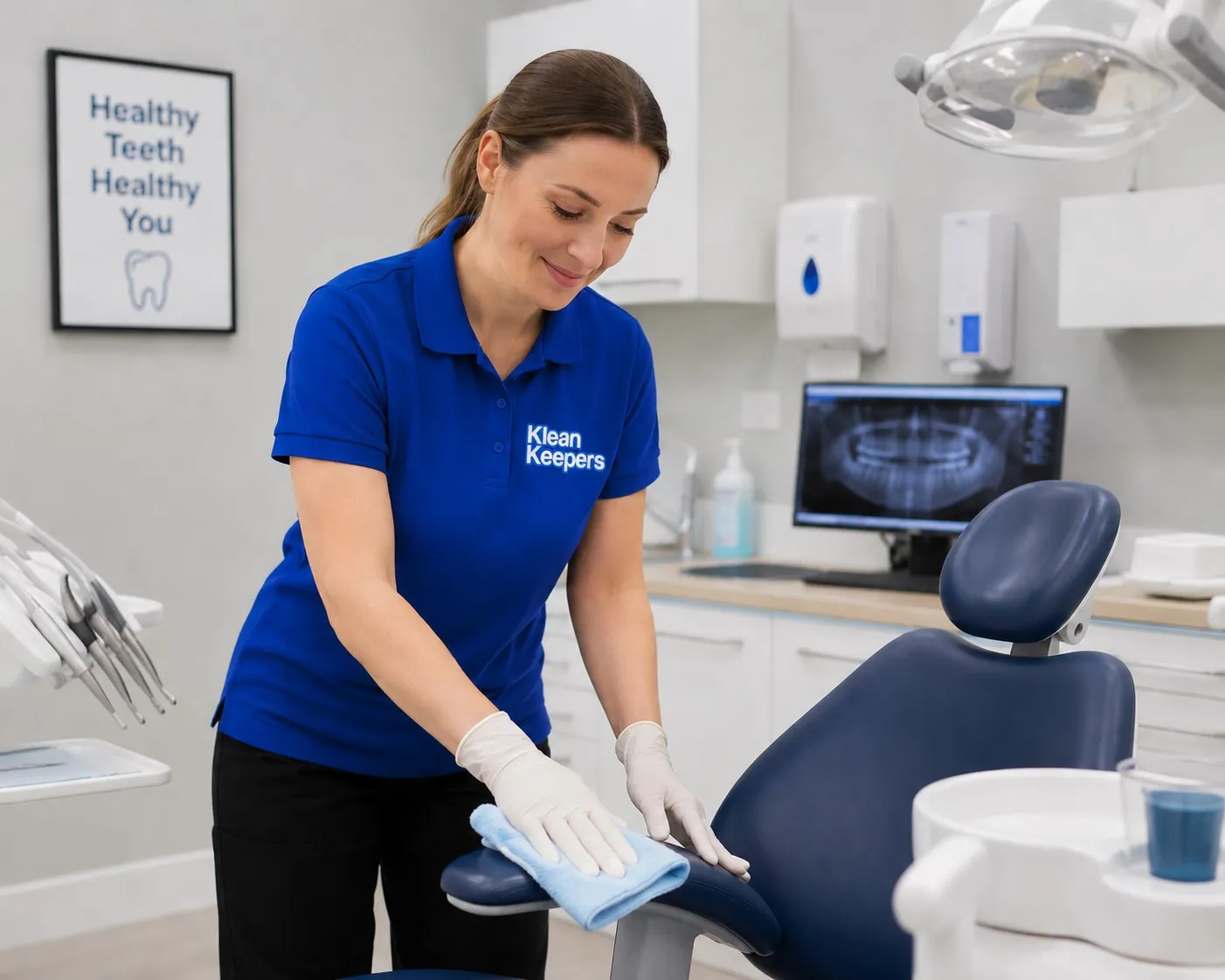
Medical Centre Cleaning in London: CQC & HTM 01-05 Compliant Healthcare Cleaning
In healthcare environments, surface hygiene is a core component of clinical safety, infection control, and regulatory compliance. Whether managing a busy NHS GP practice, a private clinical facility, or a specialist dental surgery in London, the cleanliness of the surrounding environment directly affects patient safety, practice reputation, and audit outcomes.
The regulatory framework governing primary care and dental hygiene—including Health Technical Memorandum 01-05 (HTM 01-05) and the National Standards of Healthcare Cleanliness—requires significantly more than conventional commercial cleaning. Healthcare cleaning requires specialised protocols, colour-coded segregation, appropriate chemical use, documented procedures, and clear audit trails.
As a specialist provider of medical centre cleaning in London, Klean Keepers structures its healthcare cleaning procedures around recognised infection prevention and cleanliness standards. We support clinic managers, practice leads, dental practices, and infection prevention and control teams in maintaining clean, safe, and audit-ready environments.
Below, we explain how our healthcare cleaning procedures support HTM 01-05, CQC expectations, and modern healthcare cleanliness standards.
Understanding HTM 01-05 and Healthcare Cleaning Regulations
Healthcare providers must consider several overlapping standards and regulatory requirements when managing environmental cleanliness.
1. HTM 01-05: Decontamination in Primary Care Dental Practices
Published by the Department of Health, HTM 01-05 provides guidance on decontamination and infection prevention within primary care dental facilities. While clinical teams are responsible for reprocessing reusable instruments, professional cleaning teams help maintain the surrounding clinical environment.
This can include:
- Maintaining clean and dirty zones.
- Reducing cross-contamination risks within surgeries.
- Maintaining appropriate clinical flooring.
- Cleaning high-touch environmental surfaces.
- Reducing dust reservoirs and environmental contamination.
HTM 01-05 distinguishes between two levels of practice:
- Essential Quality Requirements: The baseline requirements dental practices are expected to meet.
- Best Practice: Enhanced standards that practices should work towards, including stronger separation between clean and contaminated workflows.
2. National Standards of Healthcare Cleanliness
The National Standards of Healthcare Cleanliness provide a structured approach to environmental cleanliness across healthcare facilities, including GP surgeries, health centres, clinics, and dental practices.
Healthcare areas may be categorised according to their functional risk. Cleaning frequency, monitoring requirements, responsibilities, and performance expectations can vary depending on how each area is used.
For example, a clinical treatment room requires a different cleaning approach from a reception area, administrative office, or general waiting room.
3. CQC Regulation 12: Safe Care and Treatment
Under Regulation 12 of the Health and Social Care Act 2008 (Regulated Activities) Regulations, healthcare providers are expected to manage risks associated with safe care and treatment, including infection prevention and environmental hygiene.
During an inspection, healthcare providers may need to demonstrate appropriate cleaning procedures, schedules, chemical controls, infection prevention measures, staff training, and supporting documentation.
Our Medical Centre Cleaning Procedures in London
Our London healthcare cleaning service translates regulatory expectations into practical cleaning procedures. Our approach focuses on four key operational principles:
- Colour-coded equipment: Separation of cleaning tools to reduce cross-contamination.
- Appropriate cleaning and disinfection: Physical cleaning followed by suitable disinfection where required.
- Zoning and workflow control: Cleaning procedures structured to minimise contamination transfer.
- Cleaning documentation: Records, schedules, COSHH documentation, SOPs, and staff training records.
Colour-Coded Cleaning Equipment for Healthcare Facilities
Cross-contamination is one of the major concerns within clinical environments. Cleaning equipment used in a washroom, for example, should not subsequently be used in a treatment room.
Our healthcare cleaning teams use colour-coded equipment such as mops, buckets, microfibre cloths, and other cleaning materials to help maintain separation between different areas.
- Red: Washrooms, toilets, urinals, and related sanitary areas.
- Yellow: Clinical areas, treatment rooms, surgeries, and decontamination-related areas.
- Blue: General non-clinical areas such as reception spaces, corridors, and waiting rooms.
- Green: Kitchenettes, staff food areas, and catering-related spaces.
How We Control Cross-Contamination
- Equipment allocated to a particular cleaning zone remains within its designated area wherever required.
- Microfibre cloths are changed between rooms or zones according to the cleaning specification.
- Cleaning equipment is appropriately cleaned, disinfected, dried, and stored after use.
- Staff follow clearly defined cleaning sequences and area-specific procedures.
Cleaning and Disinfection in Clinical Environments
One common problem in healthcare cleaning is applying disinfectant directly to visibly contaminated surfaces without first removing physical dirt. Organic matter, dust, and other contamination can reduce the effectiveness of some disinfectants.
Where the cleaning specification requires cleaning followed by disinfection, our teams use a structured two-stage approach.
Stage 1: Physical Cleaning
The surface is first cleaned using an appropriate detergent and cleaning method to remove visible dirt, organic matter, dust, and other contamination.
Stage 2: Disinfection
Following cleaning, an appropriate healthcare disinfectant is applied where required by the cleaning specification and infection control procedure. Products, concentrations, contact times, and methods are selected according to manufacturer instructions and relevant healthcare guidance.
Controlled Chemical Application in Clinical Areas
Clinical environments require careful control of how cleaning products are applied. Where aerosolisation could create unnecessary contamination risks, appropriate wipe-based or controlled application methods can be used instead of indiscriminate spraying.
Healthcare Surface and Floor Cleaning
Clinical rooms contain specialist surfaces and equipment that require different cleaning techniques from ordinary commercial offices.
Clinical Flooring
Healthcare treatment environments commonly use smooth, impervious, easily cleanable flooring. Our cleaners use area-specific cleaning equipment and methods designed to remove contamination while protecting the flooring system and maintaining a safe surface.
High-Touch Surface Cleaning
Frequently touched surfaces can play an important role in environmental contamination. Depending on the cleaning specification, high-touch points may include:
- Door handles.
- Light switches.
- Cabinet and drawer handles.
- Reception counters.
- Desk surfaces.
- Chair armrests.
- Patient contact points.
Clinical Sinks and Water Outlets
Clinical sinks and surrounding surfaces are cleaned carefully according to the facility's infection prevention procedures. Particular attention is paid to reducing contamination around taps, basins, splash areas, and frequently touched controls.
Healthcare Dust Control
Effective dust control is particularly important in healthcare facilities. Depending on the environment, our teams use methods such as damp dusting, microfibre cleaning, and appropriate vacuum equipment to reduce the redistribution of airborne dust.
CQC Cleaning Documentation and Audit Readiness
High-quality medical centre cleaning involves more than the physical cleaning itself. Healthcare providers also need appropriate documentation to demonstrate that cleaning procedures are controlled, monitored, and consistently followed.
Depending on the contract and facility requirements, Klean Keepers can support healthcare clients with cleaning documentation including:
- COSHH documentation.
- Safety Data Sheets (SDS).
- Cleaning specifications.
- Room-by-room schedules.
- Standard Operating Procedures (SOPs).
- Staff training records.
- Cleaning sign-off sheets.
- Quality-control inspections.
- Audit records and performance reports.
COSHH Documentation
Cleaning chemicals used within healthcare environments should be appropriately controlled. Our documentation can include Safety Data Sheets, usage instructions, product information, and relevant chemical risk assessments.
Standard Operating Procedures and Cleaning Specifications
Cleaning tasks can be defined on a room-by-room basis according to the function and risk profile of each part of the medical facility. The cleaning specification can identify:
- What must be cleaned.
- How frequently it must be cleaned.
- Which cleaning method should be used.
- Who is responsible for the task.
- How completion is documented.
Healthcare Cleaning Staff Training
Cleaning staff assigned to healthcare environments require appropriate training for the work they perform. Relevant topics can include:
- Infection Prevention and Control (IPC).
- Cross-contamination prevention.
- Safe chemical handling.
- Personal Protective Equipment (PPE).
- Sharps awareness.
- Biohazard boundaries.
- Safe cleaning and disinfection techniques.
- Healthcare waste awareness.
Cleaning Audit Trails and Sign-Off Logs
Cleaning records provide evidence that scheduled tasks have been completed. Depending on the client's requirements, physical or digital records can document cleaning dates, times, areas, personnel, inspections, and corrective actions.
Commercial Cleaning vs Healthcare Cleaning
Medical and clinical environments require a more controlled cleaning approach than conventional offices or commercial premises.
| Area | Standard Commercial Cleaning | Healthcare Cleaning |
|---|---|---|
| Primary Objective | General cleanliness and presentation | Environmental hygiene and infection prevention |
| Cleaning Equipment | General cleaning equipment | Controlled and colour-coded equipment |
| Cleaning Procedures | Standard surface cleaning | Area-specific healthcare procedures |
| High-Touch Points | General wiping | Structured high-touch cleaning schedules |
| Documentation | Basic cleaning schedules | COSHH, SOPs, training records and audit logs |
| Quality Control | Visual inspections | Defined monitoring and audit procedures |
What Our Medical Cleaning Team Handles
Clear boundaries between professional cleaners and healthcare personnel are essential within clinical environments.
Our cleaning team can be responsible for tasks such as:
- Cleaning environmental surfaces, floors, skirting, door handles, and high-touch areas.
- Cleaning patient waiting rooms, reception areas, staff areas, corridors, and washrooms.
- Cleaning approved environmental surfaces within consultation and treatment rooms.
- Managing ordinary domestic waste according to the agreed specification.
- Replenishing approved consumables such as soap, paper towels, and hand hygiene products.
Tasks That Remain the Responsibility of Clinical Staff
Certain tasks require specialist clinical knowledge, authorisation, or clinical waste procedures and therefore normally remain under the control of healthcare personnel.
- Reprocessing or sterilising reusable medical or dental instruments.
- Ultrasonic cleaning or autoclaving of clinical instruments.
- Handling or changing sharps containers unless specifically authorised.
- Internal cleaning or maintenance of specialist medical devices.
- Cleaning specialist dental equipment requiring clinical procedures.
- Handling regulated clinical waste unless included within an authorised waste-management procedure.
Why Choose Klean Keepers for Medical Centre Cleaning in London?
Healthcare organisations need cleaning contractors that understand the additional responsibilities associated with clinical environments. Klean Keepers provides specialist healthcare cleaning services across London with procedures tailored to each facility.
Healthcare Cleaning Expertise
Our cleaning procedures are designed around healthcare cleanliness, infection prevention principles, and the requirements of the individual clinic or practice.
Flexible Cleaning Schedules
Medical centres operate at different times, so we can structure cleaning schedules around clinic opening hours, including early mornings, evenings, weekends, and other agreed periods.
Medical Cleaning Across London
Our teams provide medical centre and clinic cleaning across Greater London, supporting GP practices, private clinics, healthcare centres, and dental surgeries.
Quality Assurance and Cleaning Audits
Structured inspections, cleaning records, and performance reviews help clients maintain consistent standards and identify areas requiring corrective action.
Medical Facilities We Clean in London
Our healthcare cleaning services can support:
- GP surgeries.
- Medical centres.
- Private healthcare clinics.
- Dental practices.
- Specialist treatment centres.
- Physiotherapy and rehabilitation clinics.
- Diagnostic facilities.
- Healthcare offices and reception areas.
Professional Healthcare Cleaning Across London
Maintaining a clean and safe healthcare environment requires consistent procedures, appropriate cleaning methods, trained personnel, and reliable documentation.
By aligning our cleaning procedures with recognised healthcare cleanliness principles and the requirements of each individual facility, Klean Keepers provides professional medical centre cleaning in London for clinics, GP surgeries, health centres, and dental practices.
Request a Medical Centre Cleaning Assessment
Looking for a reliable healthcare cleaning company in London? Contact Klean Keepers to discuss your clinic's cleaning requirements, arrange a site assessment, or request a tailored cleaning proposal.
Contact Klean Keepers today to request a healthcare cleaning quote.
600a74899aac4.webp)